Quantcast

Archi-Me: CAD to virtual world

airport2 There’s no denying the demand by business for virtual environments that allow for replication of real world products and processes. Forterra’s OLIVE platform, TeamingStream’s NoviCraft, Second Life and OpenSim grids are just four environments used extensively by business for prototyping products or business.

Archi-ME is a new entrant in that space. Created by UK-based company MOOFU, its stated purpose is “a new solution that enables designers to create fully interactive avatar-based virtual environments from 3D CAD models”. If you spent a couple of minutes watching the video below, you’ll see Archi-Me in action. Those who’ve used Second Life in particular will see some big similarities around appearance and the ability to manipulate objects and change textures on the fly. In fact, there’s very little from the demo that can’t be replicated in Second Life. Which isn’t the point really: this seems an application designed for building and architecture firms who want an easy way to bring their CAD-based designs into an avatar-driven 3D environment.

To get some more details, I shot some questions through to Nick Palfrey, Managing Director at MOOFU:

Lowell: Can you give a ball-park estimate on typical cost of something like a basic house walk-through?

Nick: For applications where the client is using toolkit functionality and requires very little tailoring, which would be the case for many Architects we would be looking at under £5k. We also design custom interfaces and environments for larger organisations such as property developers, with budgets of up to £25k as new avatars, functions, networking and design options are all re-visited.

Lowell: Is there any intention to allow people to own their own copy of Archi-Me i.e. pay a license fee to create their own content rather than rely on it arriving on a DVD.

Nick: We plan to offer an import system at some point so that users can generate their own environments through their CAD models, we should stress that we are not replicating Second Life and the system will not have tools for building spaces in it. Archi-Me is all about showcasing designs and for that reason, we rely on the client or user having a thorough understanding of either 3DS Max or ArchiCad. It is also important to note that only we can package the system up for web application and hosting.

Lowell: What is the fundamental architecture that Archi-Me is based on – is it a ground-up proprietary virtual environment or does it leverage say Forterra’s OLIVE platform or something similar?

Nick: We use Unity 3D to compile our code and for all of MOOFU’s game work, we stick with this. All code, assets and scripts are customised as well as a number of SDKs being used. We use Unity because it compiles the data instantly on-screen and for visualising large buildings with multiple cameras, this functionality is very helpful!

Nick: Are you able to disclose who the client or clients in Australasia have been?

Lowell: Yes… Dr Kenn Fisher Associate Professor Melbourne University and Director of Learning Futures Woods Bagot Architects, Melbourne. This has been a project organised by him with a number of international stakeholders. More information on Kenn is available at Rubida.net!

Metaplace: worlds embedded

Raph Koster has announced the ability to embed a Metaplace world within a webpage. Significant? Indeed it is. One of the reasons video sharing services like YouTube, Vimeo and Blip.tv have become ubiquitous has been their embed features. By offering the same portability, Metaplace has further established a firm foothold in the virtual world sphere.

At this stage you’ll still need a Metaplace login to view an embedded world but the plan is for that to eventually not be the case. A WordPress plugin already exists, which is how I’ve embedded a favourite world of mine:

[mp2wp]Halloween,500,400[/mp2wp]

A range of uses have already been identified (integration with Google Maps anyone?) and the virtual performance one in particular should gain some serious traction. Without wanting to sound like a slobbering fanboy, Metaplace to date haven’t put a foot wrong and it’s hard to see anything but some serious success ahead for the platform.

What do you think: does the ability to embed Metaplace on your site make it more likely you’ll use it?

VastPark: community collaboration for enterprise

vastpark-3C-logo VastPark have announced the launch of VastPark 3C (Community Collaboration Centre), which “connects an easy-to-use social network platform with an immersive real time meeting system, allowing users to self organise within a collaborative environment.”

It’s another noteworthy integrated virtual worlds / social media entry into the enterprise market – like its competitors however, VastPark still faces an uphill battle with businesses that already have well developed intranet platforms.

That said, Victoria’s Department of Justice and RMIT University are on board with three other undisclosed organisations, so there’s a small userbase established. Growing that base will obviously be a priority for VastPark, and to date they’ve demonstrated a real commitment to working with government and business over what’s been a very lengthy development phase for the VastPark platform.

If you’re an organisation and interested in joining the closed beta of VastPark 3C, here’s where to go.

Open source virtual environments living server-free

Inside Solipsis, one month ago.

Most people familiar with the Second Life grid are also aware of the existence of OpenSim technology, commonly thought of as the Open Source alternative to Second Life.

With OpenSim, you can create your own virtual environment grid without needing to pay for licensing. The grid can be made open to the public, or be kept private, only available to those on your side of the firewall.

What is the difference, then, between the OpenSim concept, and that of Open Cobalt and Solipsis? Essentially, OpenSim grids are designed to be served from a common point. Open Cobalt and Solipsis implementations are designed to be served from many points – they are both peer-to-peer technologies.

Open Cobalt: specific market niche

Open Cobalt consists of two parts: a browser and a toolkit. The browser is used to view the 3D virtual workspaces created with the toolkit. Each workspace can live on a separate personal computer. Workspaces are real time and computationally dynamic, and each can host multiple participants. Additionally, individual workspaces can be interlinked into a private and secure network of workspaces.

Open Cobalt is based on Croquet technology. Squeak is an open source software development environment for Smalltalk-80 programming purposes; the Croquet system is derived from Squeak. The Croquet system features a peer-based messaging protocol that eliminates the dependence of a virtual environment upon a single server or server cluster, and that fosters the creation of highly collaborative workspaces. The Croquet software developer’s kit (SDK) was released in 2007, after which development under the Croquet umbrella ceased. Further development of Croquet has continued under the Open Cobalt banner.

Open Cobalt has a number of very attractive features, particularly for researchers, educators and students:

  • Open source licensing (MIT).
  • Deeply malleable, collaborative space.
  • Runs on Windows, Mac, and Linux.
  • Internet access is not required; it can run over LANs and Intranets.
  • Private environments can be created. This eliminates the incidence of griefing by outsiders.
  • Public environment can be created. This brings richness and diversity to learning environments.
  • In-world text, voice and video chat, web browsing (VNC allows access to browsers like Firefox) and annotations.
  • Access to remote applications via VNC.
  • Navigation between virtual workspaces is possible using 3D hyperlinks.
  • Workspaces can be easily saved and restored.
  • Mesh, texture, media, and whole avatar imports are possible.

Open Cobalt was started in January of 2008 by Julian Lombardi and Mark P. McCahill of Duke University.  The pre-alpha release of Cobalt (downloadable here) was announced in June 2008. Since then, Open Cobalt has progressed in leaps and bounds, featuring more functionality and more extensibility. The beta release is due this year, and a full implementation is expected to be released in 2010.

Solipsis: our market niche includes everyone.

Solipsis is also open source, and also features de-centralisation of computational work and data storage. Nonetheless, its background, implementation and philosophies are of course quite different from those of Open Cobalt.

Solipsis has been developed by French R&D partners Orange R&D, Artefacto, Archivideo, IRISA and the Université de Rennes II. The product, which has been available for download for some time, is currently in beta testing, though that is slated to be completed soon.

The Solipsis 3D project grew out a prior 2D project; the 2D browser also featured a peer-to-peer facility, and thus allowed users to engage in chat sessions without the use of centralised servers.

Beginning in 2006, with a time-line of 30 months to completion, the Solipsis 3D universe and the advanced modelling tools should now be available.

The Solipsis team has a rather grand notion of the position it will hold in the future: they desire it to replace and greatly extend the Web as it exists today. Far more than just creating a metaverse in which to communicate and collaborate with other people, they also see Solipsis as a potential way to store and present data in a more meaningful way than the conventional Web does now. Additionally, they hope that Solipsis will conquer scalability issues, promote usage and creation of high-bandwidth services, and that it will be self-organising – any part that is cut off from the rest of the metaverse will be self-sustaining.

The Solipsis GUI presents as both a stand-alone navigator, and as a Firefox plug-in and ActiveX component.

Frenzoo: Avatar Style

Anstia-MetaverseJournal2

Although originally billed as being for teenage girls, the Frenzoo concept has proven to be of interest to a much wider audience. Even though it’s early days yet, the site still being in beta, there’s already a thriving community of folks participating in Frenzoo, with a wide range of ages and nationalities, and both genders, being strongly represented.

What is Frenzoo about? Primarily, it’s about sharing style – not just "high fashion" or "mainstream" style, but whatever takes your fancy; as long as you stay within the terms of service, and your images fit into the PG category, your style will be celebrated by the Frenzoo community.

Ztylist

Your Ztylist is your avatar in Frenzoo. In addition to personalising their face, there’s a wide range of beauty products, hairstyles, clothing and accessories to choose from to create the look you desire for your avatar. Once you have chosen your Ztylist’s look, you can also alter the way they move (their Pose), and change the way their background (Home) looks. The Pose is a looped animation; you can easily choose when in the sequence to take an image (Snapshot) to get the effect you are after.

Shop

One of the ways to achieve your personal look is to shop for items. Clothing, hair and accessories are made by the Frenzoo team, and also by VIPs, who are able to create items to stock their shops with. Though currently somewhat limited in range, the number of items is growing daily, and the range of styles covered also continues to expand. Right now, only Frenzoo team members have the ability to create make-up, though they are always open to suggestions as to what they should add to the collection next.

Create

Of course, if the shop doesn’t carry just the item you desire, you can always make your own. Making personalised garments, shoes and accessories is a snap with the item creation tools supplied. There’s a stage for cutting, for making the pattern for the fabric, and for adding details like buckles, pockets and gems. Simple items can be done very rapidly – more complicated items take more fiddling and more time, but are eminently possible. The original shape of your item is determined by the template you choose initially: a ball-gown cannot be cut to make jeans, but jeans can easily be cut down to make shorts.

Right now, VIP status is gained by demonstrating your capability and interest to the Frenzoo team – look in the Frenzoo forums for the appropriate information.

iantoagain.jpg

The Zoo

Under the Zoo tab, you can get a quick overview of what other people’s Ztylists are wearing, and you have a quick link to their profile pages. Also under the Zoo tab are the Clubs, which are a great way to meet and communicate with people who have the same interests as you.

Shows

Shows are a fun and entertaining way to share your outfit creation and compilation abilities! It’s also a good place to make new friends. Each show has a theme; past themes have included Barbie, Emo and Cosplay (Superheroes, in this case). The idea is that you dress according to the theme, and then everyone gets a chance to vote for their favourite outfit. To keep things fair, the Frenzoo team has ensured that you can’t vote for yourself, and asks that you not spam people asking for their votes!

Share

Frenzoo has made it easy to share around the Frenzoo love – there are a wide range of banners and logos available to place on other web sites, and it’s also easy to place snapshots of your Ztylist on blogs, Myspace, and other similar places.

Forum

The Frenzoo forum is essentially like any other forum – it contains useful information about the site, alerts users to upcoming shows and changes to Frenzoo, and is a great place to carry on conversations with other users in the community. Moderation is in place to keep the atmosphere friendly and safe – if you wouldn’t say it to a 13 year old, don’t say it here.

Verdict

Frenzoo is a nifty piece of work, and there are more improvements to come. It may or may not be attractive to you now, but be aware that there are many changes in the pipeline – and one or more of those might make the difference that gets you intrigued.

Metaplace impressions

At The Metaverse Journal, we’ve followed Metaplace closely and covered its beta phase previously. Senior contributor Tateru Nino was asked to put Metaplace through its paces to ensure we haven’t been too starry-eyed about its potential – Editor.

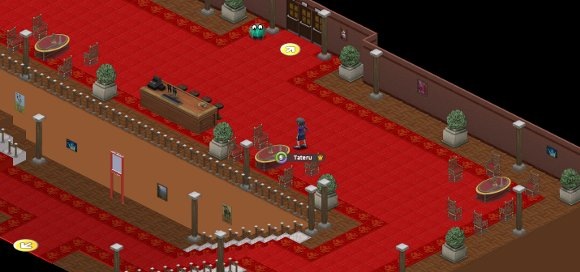
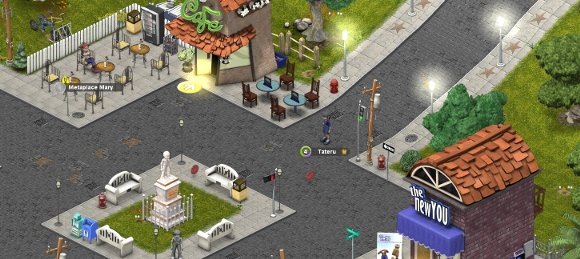
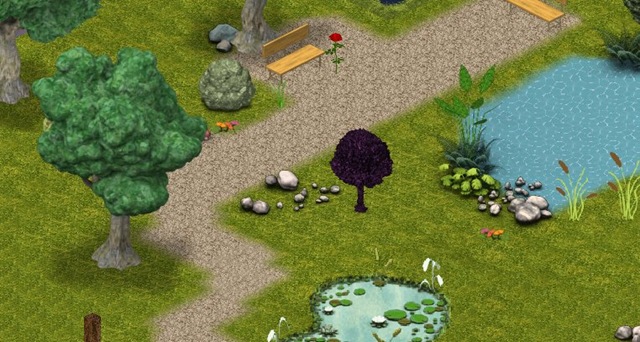
Still in beta, Metaplace still has some rough edges and glitches, but it is certainly coming along very nicely.  The look and feel of Metaplace mostly calls to mind the isometric 2D games of the mid 1990s. That’s very much the look and feel of much of it, though it is in a considerably higher resolution than the game titles of yesteryear.

You could be forgiven for thinking its areas as strikingly similar in some ways to the tactical maps of the old X-Com game series. It runs conveniently in a browser, and is entirely Flash-based, downloading what it needs, when it needs it.

tmj-tan-metaplace1

Metaplace is divided into worlds. Each world being more or less a variably-sized map, viewed in a variety of ways and interconnected into a larger, multidimensional abstract geometry. There’s no broader landscape, and no particularly enormous spaces. Like – say – Richard Garriott’s Ultima VII, there’s an internal sense of the three-dimensionality of objects, but it is primarily a two-dimensional experience. Which isn’t necessarily a bad thing.

tmj-tan-metaplace2

Metaplace’s strengths appear to be largely organized around social and gaming. Metaplace strongly supports the creation of spaces, particularly gaming spaces. Objects are almost trivially easy to create within metaplace, and the system actively supports a variety of relatively painless ways to get content into the system.

If you want, for example, a boat, the system will offer to take your search to Google 3D Warehouse, where you can simply select one of the available models, and Metaplace will do all the heavy lifting to import it for you. A useful variety of behaviours can be added to objects with just a few clicks, and no-scripting, and there’s support for more intricate systems as well.

tmj-tan-metaplace3 Views of spaces can be customized, UI widgets can be added. There’s a great deal of support for building game-spaces, and if I were able to spare the time for making a game, Metaplace is definitely where I’d want to be doing it.
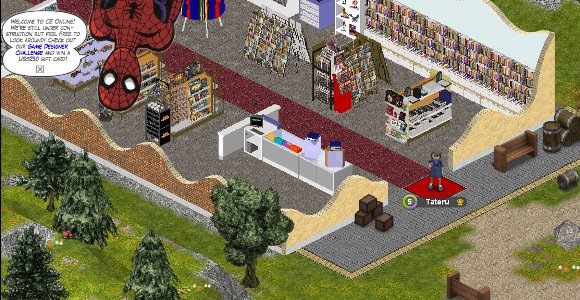
Metaplace tracks experience (‘metacred’, actually) and assigns levels, keeping track of the basic types of activities you indulge in. People can tell at a glance if you’re a socializer, explorer or builder by nature – though hardly anyone actually seems to pay attention to that. You gain metacred and presently also coins (for the economy prototype) by, well, socializing, exploring and building, basically.

Some issues still present themselves, of course.

The economy and monetisation of the platform is still in the early stages. It’s “soft-launched”, if you like, and users are still in the early days of getting to grips with the potential of the platform. Much of the content you’ll see is still under construction.

tmj-tab-metaplace4

The urge to right-click – for context menus and the like – is almost overwhelming, but of course that just brings up the options for Adobe’s Flash Player. Some of your basic tools can be a little erratic. Sometimes your mouse scroll-wheel will function to zoom in or out of a scene, and sometimes – well – it just won’t. Even left-clicking on things can be somewhat erratic.

tmj-tan-metaplace5 Likewise, we’ve had a few issues with setting properties on objects and getting those to actually stick. The further you are from Metaplace in network terms, the more erratically it seems to behave.

That said, Metaplace is still early in the beta stage, and we’ve got every confidence that its various teething problems will continue to sort themselves out. We’re definitely looking forward to seeing how the platform, the economy and the user-generated content all develop.

Metaplace enters Open Beta

metaplace-openbeta
Today the Metaplace team have announced the mover to Open Beta, so if you haven’t checked out this impressive 2D world with content creation, you now have no excuse not to do so.

If you want some insight into Metaplace’s founder, Raph Koster, you can check our interview with him here.

Things have evolved significantly since our impressions of the Closed Beta, but my thoughts haven’t changed: this is a potential game-changer of a virtual world.

Over to you: have you checked out Metaplace, and if so, has it captured your imagination or is it just another 2D option?