Quantcast

Blue Mars on iPhone: testing underway

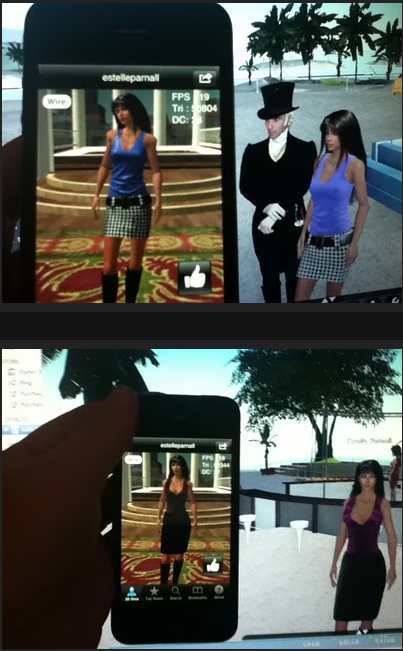
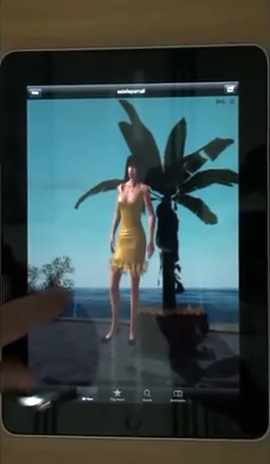
A brief post from Australian fashionista and Blue Mars insider Estelle Parnall, has a shot of some testing she’s done of the iPhone version.

The shots (pictured left) aren’t really different to the ones released when the announcement of the iPhone version, PC version halt and staff layoffs were announced a fortnight ago.

That said, those limited glimpses do show promise, it’ll be interesting to see the progress made in coming months.

Disclosure: Estelle advertises with the Metaverse Journal.

Popularity: 1% [?]
The partial death and refocus of Blue Mars

In a fairly unexpected move, Avatar Reality’s CEO Jim Sink has announced the cessation of development of the PC application version of virtual world Blue Mars, with the soon to be smaller company moving to focus on developing for the iOS (read: iPhone / iPad) platform. The change involves the loss of a number of staff, including Jim himself. You can also listen to audio of his discussion with the Blue Mars community here.

Whichever way you look at it, this is a major setback for the company. The switch to iOS, however viable, does provide a stark contrast to the PC-only development to date. That sort of strategic shift doesn’t happen overnight, and given the fact an alpha of the iOS version is already in existence adds weight to that. On the face of it, it looks like another shift to the more superficial virtual worlds offering. The withdrawal of technical support and the shelving of further development for the current PC client will have a serious impact on the core group of content creators who’ve been working on the platform to date. Those creators may still have a role to play on the iOS version but it’s hard to envisage it moving out of beta before the end of the year.

Overall, this announcement has a few key impacts. First, it effectively ends in the short-term any claim Blue Mars had over being a serious challenger to Second Life. Second, Blue Mars now enters the iOS marketplace which is burgeoning with developers working on virtual worlds. Third, this places an ever more focused spotlight on the viability of more complex, content-driven virtual worlds. I’m hopefully very wrong but there seems to be a race to the bottom for market share more broadly. Hopefullt Blue Mars proves that wrong but I’m unconvinced.

Sincere commiserations to those affected by this change.

Popularity: 2% [?]

Surviving a day in Minecraft

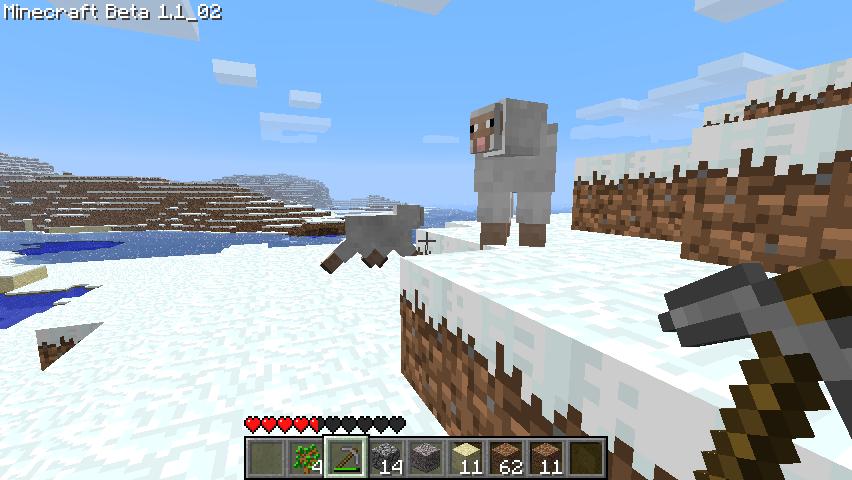
I appear on a snow-covered beach and look around me. The sun is rising, but it is doing it very quickly. The whole day will pass in just a few minutes, and I have a lot to do. First I test the ice. It holds me up well enough and there’s an interesting island out in the lake off to my right. First thing, though, I’m looking for trees.

I turn around and climb up the slope to my left, hoping for a better view. I pass a couple of cows trudging aimlessly through the snow as I look for a good vantage point.

From the top of the nearest hill, I can only see a couple of isolated trees. It will have to do for now. Time ticks.

I get into the shade of the tree, and use my hands to harvest a supply of wood, then move onto a second tree between two hills. Wood seems scarce here, but I soon have a small supply of it and some cuttings to plant. After all, I’m going to need more wood before long. I’d better start organising a renewable supply.

Something catches my eye, though. A nearby rock-face shows exposed coal.

I work with the wood I’ve got, making myself some planks and shafts, and a simple work-bench. In less time than it takes to tell, I’ve got a simple wooden tool. It won’t last long breaking rock, but it doesn’t have to. I focus on the rocks next to the coal, before moving on to the coal-seam itself.

Quickly, I obtain a little coal, and enough stone to use for the head of a new pick-axe. I look up at the sun. There’s always a little time-pressure on the first day.

It’s Noon already. Nasty things come out at night, so I need to organise shelter quickly. Time to trek out to that island I spotted earlier. It takes me a moment to get my bearings, though. With the sun right above me, I’m not completely certain which direction I’d come from. Then I spot the cows again, between two of the nearest hills, and strike out that way. Moments later, I have a view of the icy lake, and the island.

Not all of the lake is frozen, but enough of it is for me to trek straight out to the island that I spotted earlier.

The sole inhabitants of my new island are four sheep, hopping around and bleating. A quick survey reveals that it isn’t a true island. The far side is joined to the mainland by a sandbar. Nevertheless, it will do. I need shelter before it gets dark.

With my hands, I start scooping away snow and sand. Pick-axes are for stone, and I don’t want to ruin it on softer materials. I cut a tunnel straight into the side of the hummock from its beach, and it isn’t long before I’m a few metres in and cutting through stone with my rapidly deteriorating wooden pick-axe. I quickly hollow out a small chamber, once knocking a hole in the roof, which I repack with dirt.

I left my primitive workbench back near the coal-seam, so I build another. I shove it into a corner, but the light coming in through the entrance is already starting to fade. It will be dusk soon. Very soon.

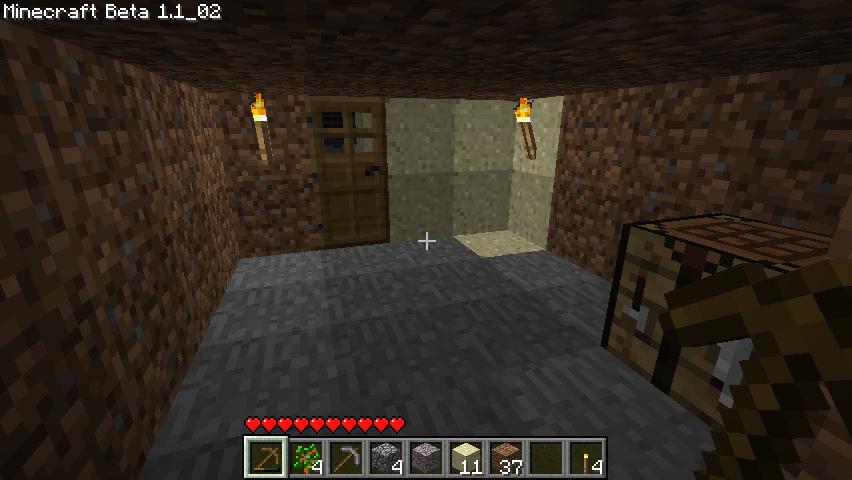
I lay out six planks on the bench and make a simple door. While I’m doing that, I combine some coal with some sticks and make some torches. When I look up, I realise just how dark it is getting. I hurry to the entry tunnel and put the door in place, checking that it opens and shuts properly. A bewildered sheep looks at me from the beach.

I move around the chamber that I’ve dug out, and jam some of the torches in the walls. Well lit now, with a door between myself and the outside. I settle down to wait out the night. I can already hear … things moving around outside. Dark-loving creatures that will kill me if they can.

The night will pass as quickly as the day did, and now I have shelter. In the morning, I’ll plant some trees, find some more coal, and see if I can expand my diminutive fortress. The island isn’t large, so most of it will have to be either up or down.


This is Minecraft, an independent game by a small European developer called Mojang Specifications.

Minecraft has been under constant development for quite some time now. It’s a java-based game which runs in a browser, or as a separate download, and receives frequent updates. It’s just graduated to beta, and features continue to be added at a steady rate.

Minecraft is almost the archetypal sandbox game (with actual sand, moreover). With coal and wood, stone, sand, soil and metal, you can make all sorts of things. What you make is up to you. There’s no goals other than what you set, no achievements to strive for, no satisfaction other than setting out to do something and accomplishing it.

At night (and in the dark places of the earth), nasties of all sorts emerge that mean to do you harm. You can fight them or avoid them if you prefer. There are skeletons, zombies, giant spiders, blobs and more. You can make bows, swords and armour and fight them, or like me set up a sturdy home to keep them out – or both, if you prefer.

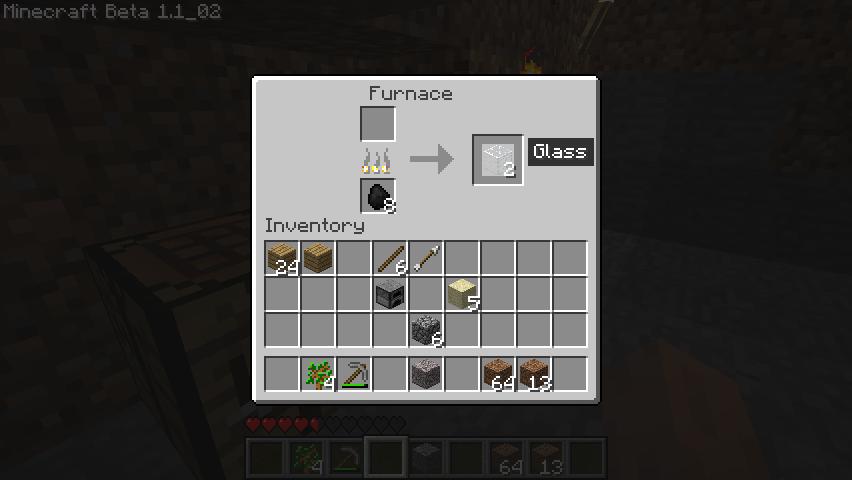
Minecraft allows you to make tools, doors, switches, signs, levers, pressure-plates, mine-carts and tracks, boats, buckets, and more. You can take the wood, soil, sand, and rock that you’ve harvested or dug out and place it as you please, making new structures – you can cook meat from animals, or turn sand into glass blocks for construction of windows and skylights. You can swim, drown, jump or fall into lava. You can build a portal to some ghastly netherhell – you know – just for laughs.

If you should die, you’ll drop everything you had, and reappear otherwise unscathed back at the place where you first started. Unless lava destroyed your belongings, you can go and get it all back again. Weapons, armour and tools all wear out with use, though and need to be replaced now and again.

Minecraft’s sound is simple, but effective. A lot of what you hear is digging sounds, over the background music (which you can disable if you prefer it).

What might really catch your attention, though, are the games graphics.

Minecraft’s graphics are all essentially simple and blocky. It doesn’t require an awesome amount of computing power to run (though if you have plenty, you can crank the settings up). It’s like the world is made out of a child’s construction blocks, and might get you thinking of many of the computer games from the late 1980s and early 1990s. Don’t be put off by the retro visuals, though, because the game’s graphics while simple, are charming (and unusually sophisticated) and – more importantly – get you thinking in terms of blocks.

Digging out blocks and stacking blocks are the keys to mining and construction. Like assembling anything with Lego – only Lego the size of your head. So, the blocky nature of the terrain and creatures (and even the clouds, sun, moon and stars) isn’t just a cheap shortcut. It’s a stylistic choice that supports the simulation at every level.

There are no goals and no story to Minecraft – it doesn’t really count as a game by objective definitions. It is, however, an excellent toy, and like any toy, you can play games with it and have fun with it. Minecraft runs in a window, and suspends itself when not actively being used, making it an almost ideal pick-up-and-play casual diversion.

Minecraft was the primarily the work of a lone programmer, Markus Persson, however the game recently hit the public imagination, and discounted pre-beta sales were… well, fairly staggering is what they were. Persson was able to hire staff and office-space, and Mojang Specifications is now working full-time on Minecraft and another (as yet unannounced) project.

Presently, Minecraft can be purchased online from its Web-site for €14.95, while it remains in beta.

Popularity: 1% [?]

Second Life / OpenSim developers sought

I had the pleasure of meeting Dale Linegar last year – he’s one of many innovative Australian educators working in virtual worlds. He’s after some developers as detailed below, preferably Melbourne-based. If you’re interested, drop him an email.

We are a small, dedicated team of educators, developers and programmers who are working on a range of virtual world, AI and mobile related products for several Australian Universities.

We are based in Melbourne and would prefer to work with locals if possible due to the complex nature of many of our projects, however we do have some remote staff and are always open to change.

We require people with one or more of the following skills;
- Lsl scripting
- Experience with XML PRC and REST
- Experience with Cakephp
- Experience running Opensim servers
- Experience with AIML, perhaps also radegast or program-o

Most of all, you should love what you do.

Pay and hours will depend on your skills and experience.

If you fit one or more of the roles above, please get in contact with dale@oztron.com.

Disclosure: Dale kindly paid a fee for this post, which has been donated in full to Metaverse Aid.

Have a job you’d like to advertise? Contact us to discuss. Rates start at a $25 Metaverse Aid donation for a two-month text link.

Popularity: 1% [?]

Why Second Life is already second-best for education

The announcement by Linden Lab in the past 24 hours that their discounting of pricing for educators and non-profits would cease in January 2011, has engendered the expected level of outrage. And rightly so, given the critical mass of educators that have generated significant outcomes for Second Life. In fact, it could be argued that it’s only the good news stories generated by the non-profits that have helped offset some of the negative aspects inflated by parts of the mainstream media and others. The comments section below the announcement is well worth a read: even taking out the initial emotion, the overwhelming attitude is that it’s time to downsize or move on. Of course, the migration to OpenSim grids is already well underway, for a range of reasons.

As someone who follows virtual worlds pretty closely, I thought I understood the specific reasons for the move from Second Life fairly well. However, I only got the full picture over the past month, when I needed to explore options for my own education-related build. Without boring you with detail, I’m looking at conducting some research that will involve some fairly complex simulations. When I wrote the proposal for the research, I was already assuming that Second Life wouldn’t necessarily be the platform due to cost constraints (and this was before the price-rise announcement). That assumption was confirmed after some detailed discussions with a number of people, including someone developing a number of education-related projects including one aligned with my own proposal.

Based on those discussions and my own observations, here’s the key reasons I’ll not be working in Second Life for my education project (and most likely using either Unity3D, OpenSim or both):

Content creation: Although SL provides some great scripting options, the learning curve is significant and there’s minimal support for defacto design and modelling platforms. This leads to the need to either hire an SL builder or give up a significant chunk of time to learn a scripting language that’s not transferable elsewhere (except in some respects to OpenSim).

Structured learning: There is minimal ability in SL to guide avatars through particular experiences. Heads-up displays can work to some extent, but the scene-by-scene capability of Unity3D is head and shoulders above.

Reliability: ignoring historical challenges, the fact remains that down-time in SL is totally at the mercy of Linden Lab. A standalone OpenSim grid or a Unity3D installation aren’t as susceptible.

Client: SL being still being a standalone client makes it a bigger challenge to use for education that a web-based client. That may change in the medium-term but it’s a deal-breaker for purposes where dedicated PCs aren’t an option.

Ease of use: One of the key weaknesses of SL is it’s ease of use, particularly for new users. It’s something that has improved and will continue to improve. Although competitors aren’t markedly better, they certainly aren’t worse.

I want to make an important point: Second Life deserves to continue to grow and I’m still confident it will, albeit with a very different focus to what it has now. The decision on education pricing fits the wider business model as it now stands. Even that is fine, if it’s based on confidence of a new market and unshakeable faith that the current shortcomings of SL will be overcome soon enough. On the face of it, that market isn’t apparent and the improvements still seem a while away.

I’d love to hear from educators / non-profits at the coalface. Emotions aside – have you started considering moving away from Second Life, and if so why?

Update: Linden Lab have made a follow-up statement with a rather interesting take on things.

Popularity: 3% [?]

Review: Onverse

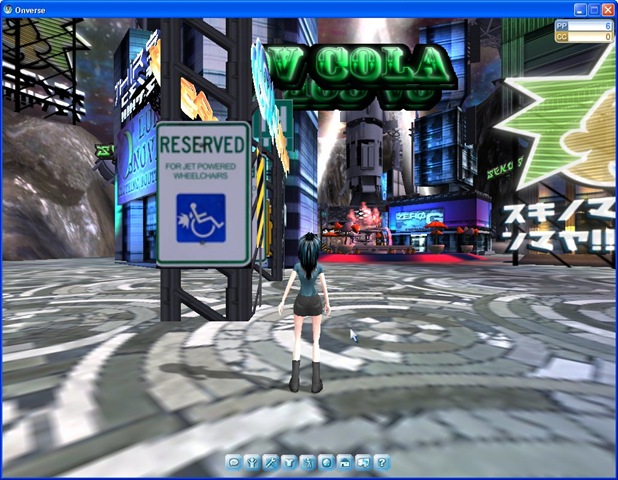
My avatar, on the Learning Course

Onverse is comprised of a 2D web site, connected to a 3D virtual environment. Together, they form an intriguing new social networking platform with games included – games intuitive enough for non-gamers to learn, but complex enough for gamers to be interested in. You log in using the same account credentials regardless of whether you log in on the web site or the virtual environment. Cross-functionality between the two is increasing even as Onverse gets closer to its official launch date, which is slated for April 15th 2010.

From the moment you start signing up for an Onverse account, you are given some personal artistic choices regarding your avatar’s look, and as you progress into the environment, more and more choices open up to you, including decoration of your own free apartment. Some of the clothing, furniture, and tools are free. Some things you can buy using points, one of the Onverse currencies collected in-world. Some items are available only by purchasing Cash Coins (the other Onverse currency). Apart from clothing, you can also choose animations and emotes to use that further individualise your self-expression and your experience of Onverse.

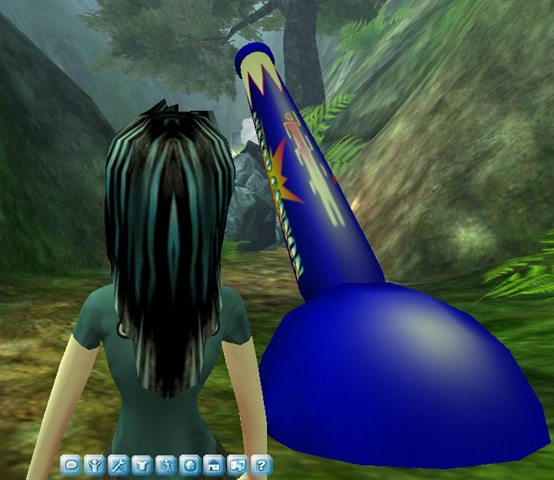
The Avatar Cannon There are currently three modes of travel in Onverse: you can teleport between worlds, of which there are three at this time (The Hub, Volcano Island, Ancient Moon); you can travel long distances with the Avatar Cannon (though it’s best if you don’t try to aim for any specific landing point the first few times); and of course, you can always walk.

The Hub, Volcano Island, and Ancient Moon each feature outdoor areas and shops. The Hub also boasts apartment buildings, a casino, a nightclub, and an amphitheatre. Volcano Island and Ancient Moon each have themed housing communities – instead of having your apartment in an instance run just for you, apartments are grouped together in lots of 40+ to an instance. You can meet new friends or encourage your existing friends to become your neighbours.

I was initially unimpressed by Onverse. That was until I started doing a little digging, and discovered how little time it had been in development for, how few people were working on it, and the tiny budget that Onverse has currently. This is the team listing: Steve Pierce – “The Designer”; Wes Macdonald – “The Engineer”; Eric Hoefer – “The Artist”; Ben Steele – “The Animator”; Scott Mitting – “The Web Engineer”. The social networking component alone was built in under a month; the virtual environment in a comparative period of time for its size. Many parts of the coding for the game world, including the back-end server, have been written from scratch. The team also needed to learn to create avatar and clothing meshes. Other things that impressed me:

1. There’s a client available for the Mac that does not lag behind the Windows client

2. The client for the virtual environment can be run on computers with relatively low specs, and they have been streamlining their software and reducing the RAM footprint so that machines with even lower specifications can still run it.

I was also intrigued by the Onverse method of filling the world with music: signing on bands and artists who allow their music to be played in-world. Indeed, “Onverse is always looking for new bands who would like to showcase their talent inside our world. If you would like to be considered, contact us at music@onverse.com.”

If the use of casual games and social interaction on Facebook is any indication, then Onverse, with its more engaging environment, combined with socially interactive opportunities, should do extremely well. I believe that there will need to be a range of add-on game types if the product is to appeal to gamers and casual gamers alike, but I feel that the trend in Onverse is towards such a range. I look forward to monitoring their progress.

Ancient Moon

Popularity: 1% [?]

Archi-Me: CAD to virtual world

airport2 There’s no denying the demand by business for virtual environments that allow for replication of real world products and processes. Forterra’s OLIVE platform, TeamingStream’s NoviCraft, Second Life and OpenSim grids are just four environments used extensively by business for prototyping products or business.

Archi-ME is a new entrant in that space. Created by UK-based company MOOFU, its stated purpose is “a new solution that enables designers to create fully interactive avatar-based virtual environments from 3D CAD models”. If you spent a couple of minutes watching the video below, you’ll see Archi-Me in action. Those who’ve used Second Life in particular will see some big similarities around appearance and the ability to manipulate objects and change textures on the fly. In fact, there’s very little from the demo that can’t be replicated in Second Life. Which isn’t the point really: this seems an application designed for building and architecture firms who want an easy way to bring their CAD-based designs into an avatar-driven 3D environment.

To get some more details, I shot some questions through to Nick Palfrey, Managing Director at MOOFU:

Lowell: Can you give a ball-park estimate on typical cost of something like a basic house walk-through?

Nick: For applications where the client is using toolkit functionality and requires very little tailoring, which would be the case for many Architects we would be looking at under £5k. We also design custom interfaces and environments for larger organisations such as property developers, with budgets of up to £25k as new avatars, functions, networking and design options are all re-visited.

Lowell: Is there any intention to allow people to own their own copy of Archi-Me i.e. pay a license fee to create their own content rather than rely on it arriving on a DVD.

Nick: We plan to offer an import system at some point so that users can generate their own environments through their CAD models, we should stress that we are not replicating Second Life and the system will not have tools for building spaces in it. Archi-Me is all about showcasing designs and for that reason, we rely on the client or user having a thorough understanding of either 3DS Max or ArchiCad. It is also important to note that only we can package the system up for web application and hosting.

Lowell: What is the fundamental architecture that Archi-Me is based on – is it a ground-up proprietary virtual environment or does it leverage say Forterra’s OLIVE platform or something similar?

Nick: We use Unity 3D to compile our code and for all of MOOFU’s game work, we stick with this. All code, assets and scripts are customised as well as a number of SDKs being used. We use Unity because it compiles the data instantly on-screen and for visualising large buildings with multiple cameras, this functionality is very helpful!

Nick: Are you able to disclose who the client or clients in Australasia have been?

Lowell: Yes… Dr Kenn Fisher Associate Professor Melbourne University and Director of Learning Futures Woods Bagot Architects, Melbourne. This has been a project organised by him with a number of international stakeholders. More information on Kenn is available at Rubida.net!

Popularity: 1% [?]