Quantcast

The most successful virtual world: Nintendo Wii

Here’s an astounding statistic: nearly 36 million Nintendo Wii consoles have been sold, and that’s a conservative figure. The Wii is streets ahead of the Sony Playstation 3 and the Xbox 360, and is likely to eclipse behemoths like the Playstation 2 – Sony have shifted nearly 120 million of those but the Wii is at a much earlier stage in its lifecycle than the moribund PS2.

Compare those numbers to even the largest virtual worlds like Habbo and World of Warcraft and they emphasise the dominance of game consoles over similar PC-based activities. It remains difficult in some parts of Australia to buy a Wii over the counter – three months ago when I purchased mine, it took three attempts at three different stores before I was able to pick one up. When I finally did so and set it up, I was really gobsmacked at the centrality avatars are given on the Wii.

It’s all about Mii

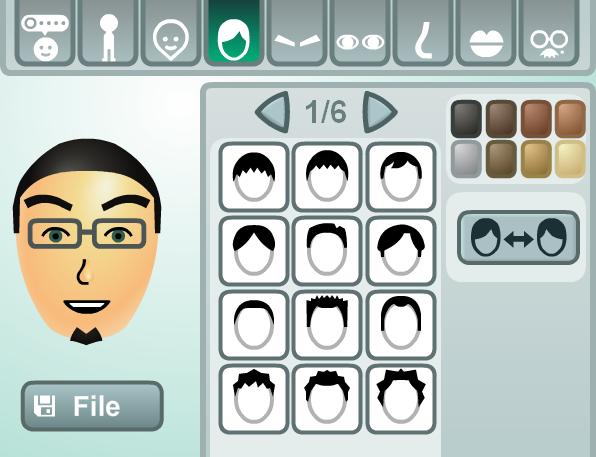
A key part of the Wii experience is creating your avatar – your Mii (pronounced ‘me’). Every Mii is highly customisable and it’s very simple to go back at anytime and change your Mii’s appearance. In the pre-teen market this alone can provide hours of entertainment – I’ve seen kids aged between six and ten endlessly altering their Mii. Once your chosen Mii is set up, it then follows you into the Wii games you play. The Wii Fit utilises your avatar totally – it’s truly you as you enter a bunch of personal details like height, weight and eating habits . In the more game-like experiences such as Mario Kart, you can race your Mii against characters like Mario, Bowser and Princess Peach.
I feel connected

All that said, an avatar alone does not a virtual world make – the key is the Wii’s internet connectivity. Your Mii can mix with others you grant access and scores or Wii Fit results can be shared. There’s Mii contests and most games have some sort of online mode – Mario Kart for example allows you to race against other players worldwide, which is enormously fun. Actually getting connected is fairly simple, assuming you know the basic of wireless networking.

Not surprisingly, there’s also a Wii Shopping Channel where you can buy credits that can be exchanged for a range of products including old Nintendo Classic games like the original Mario and Zelda games. They work out at over $10 per download which isn’t cheap given their age, but the pull of sentimentality and convenience is likely to persuade some.

The contender for the title

There’s no standout aspect in the Wii offering that makes it a dominant virtual world contender – though the motion-aware Wii controller is an amazing piece of gear that cements that link between you and your avatar. It’s the overall offering that makes me think it’s likely to come out on top. Specifically:

  • It’s extremely easy to set up after purchase
  • You’re guided every step of the way when performing any activity the first few times
  • It’s plain fun
  • It has wide age appeal
  • It’s already got a lions share of the console market, and that’s only going to increase in the medium term
  • On the age aspect, I’ve seen people in their 60′s immediately grasp the avatar concept as it’s presented on the Wii – two had never owned a computer. The Wii is far from unique in its offering – the Xbox 360 is testament to that. However, Nintendo appear to have created a product that has penetrated the mainstream entertainment market in a way no other console has to date. When you’ve got grandparents happily retelling stories of playing Wii sports with their grandchildren, something fundamental has occurred in the way gaming is perceived in society. Sony’s Home offering may provide some stiff competition in the medium term – but until then it’ll be fascinating to see how much the Wii saturates the market.

    So there’s my hypothesis: by 2010 the Nintendo Wii will contain the world’s most populated virtual world. I’d really like to hear your thoughts on this.

    A big thanks to beastandbean on Flickr for the Wii Fit photo and to gamesweasel for the Mario Kart Wii pic.

    Popularity: 6% [?]
    Saddle Club virtual world on the way

    A Canadian digital entertainment company, GS New Media, have announced development of a virtual world based on The Saddle Club ™ TV show, a Canadian (Protocol Entertainment) and Australian (Crawford Productions) co-production. It’s a show targeted squarely at pre-teen kids with a heavy female slant.

    Crawford Productions Pty Ltd. (Australia) and Protocol Entertainment, Inc. (Canada)
    The platform for the world will be Sun Microsystems’ Project Darkstar, which can be seen here:

    For a glimpse of the tween fan base for the show:

    The purpose for the development is not surprising and transparently stated:

    “The online tween and teen market is a hot spot for investors and advertiser alike, a result of critical user mass meeting proven subscription-based business models. More than $1 billion was invested in 2007 in virtual world companies with an additional $185 million committed in the first quarter of 2008 alone.”

    GS New Media have some fairly subsantial people on board although this it’s the company’s first development of this scale.

    This is the type of virtual world development (like Hello Kitty) that’s leveraging off a huge fan base. The perpetual challenge is to convert that group into devoted virtual world users. There’s plenty of failures in these developments but at this early stage you’d have to put money on some degree of success with the popularity of the franchise.

    2009 is the broad launch date. I can already hear the squeals of a few hundred thousand or more tweens…

    Popularity: 3% [?]

    ‘Amazing Worlds’ release pictures and video

    I received a media release from Amazing Worlds (formerly Mirror Worlds), to announce some pictures and video of their offering, which is still under development.

    amazingworldsmarch2008.jpg

    The photos are located here or check out the video on You Tube :

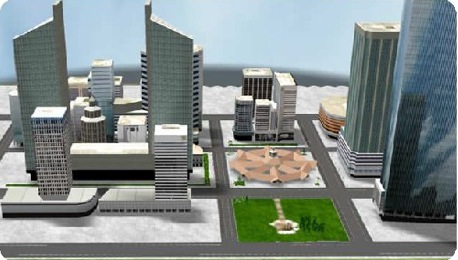
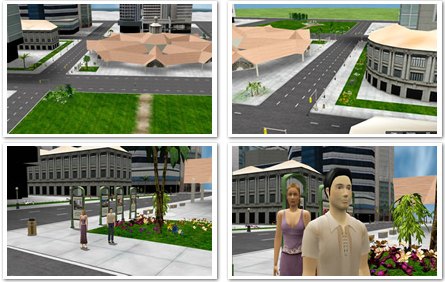
    The new information shows that Amazing Worlds is well underway and it certainly has a Second Life feel about it. Because it’s touted as a 3D tourist world, the standout issue for me is people. Like Second Life, it appears that there’s lots of non-populated space, which gives an extremely different impression than real life. In Second Life that dissonance isn’t a major issue but for a world wanting to give people an immersive example of its real life alternative I believe that’ll be a big challenge. What do you think?

    Popularity: 2% [?]

    Singapore’s Mirror World shows business promise

    I received a press release today from Singapore-based company ‘Virtual Worlds’, touting their Mirror World which is under development and due for launch at the end of this year. The full text of the press release is below by essentially it’s a platform that will allow creation of replicas of real-world locations for the purpose of 3D walk-throughs. It’s aimed squarely at tourism operators and its appeal is obvious. Never been to Egypt? Then do the virtual tour of key locations and decide if it’s the holiday for you.

    singaporevirtualworld.jpg

    It looks promising but like any new development it will face the challenge of a growing number of competitors. Interoperability with other worlds is a holy grail for any option at this stage but any new development needs to take the growing movement in that respect into account.

    We’ll be following this development closely and hope to do a more detailed preview in coming months.

    The full text:

    PRESS RELEASE

    22 January 2008, Singapore — Virtual Worlds , developers of the world’s first “Mirror World” ,announces the availability of the world’s first platform for virtual tourism to industry operators today in Singapore.

    From key tourism destinations, places of interest , historical sites to realistic full scale 3-Dimensional replicas of entire cities. This mirror world of our existing planet – “Mirror World” allows end users to journey through “virtual words” in the comfort of their homes – creating a brand new exciting marketing tool for tourism industry players like tourism destination operators, Hoteliers, Shopping Malls, Retail Outlets and more to showcase and sell their destinations and facilities to key markets around the world.

    What sets Mirror World apart from other 3D environment developers in the market is its commitment to the recreation of reality. All images, environments, content and cityscapes are designed to be as life-like and accurate as possible to the real world. A Beta version of the software with the capability to show certain parts of the world is already available today. The technology today allows support for up to a million objects per view area as well as sound and music , complete with special effects showing realistic weather patterns and powerful animation effects. Providing the most realistic virtual reality tour of any destination available in the market today. The company is already in discussions on several projects with tourism authorities and facilities operators in the region to build 3D replicas of their existing sites. Virtual Worlds expects to completely map the globe in phases, providing a brand new exciting, interactive platform for vacation , travel planning and learning.

    Another interesting factor about the platform lies in its ability to be able to import exsiting 3D drawings of existing infrastructure and buildings . That means we can do a
    very rapid buildup of the location. Targeted for a world wide launch in end 2008, consumers will be able to explore parts of the world in 3D, meet and chat with friends from all over the world all from their desktop over a internet connection and most importantly win prizes to travel around the world.

    “This is an important and necessary step in the development of Virtual Worlds,” said Terence Mak, Director of Virtual Worlds Asia. “Virtual Worlds has always been depicted with a fantasy, its about time we changed that thinking and use of the same technology to make the world a smaller place. Air Travel & Tourism is booming with the availability of budget airlines, consumers are beginning to be more world conscious, what is missing is a technology and a platform to showcase the World in 3D to a global audience. We hope to be the partner with many of the worlds interesting places and help them showcase what they are doing to make the world a more interesting place.”

    A more global site will be announced later in the year. For more information, please visit the Virtual Worlds Site.

    Update: an interview with Terence Mak can be found here.

    Popularity: 5% [?]

    VastPark evolution continues

    VastPark is a platform we’ve covered a number of times, mainly because of its Australian roots. There’s been some further development occur, with launch of forums and some new features in the software itself:

    1. Support for 3D audio and ability to script sound effects to occur on certain events.

    2. Chase controller: “Attach objects to each other. Have objects (mesh, cameras, etc) chase other objects. The system generates smooth chasing automatically. Set up a solar system, have planets chase the suns rotation, or a barrel knocking over brick, or a car towing a trailer, or birds chasing a darting moth and a camera chasing the birds. Furthermore, this feature now allows you to create a 3rd person camera in which will follow an animated avatar.

    3. Normal Mapping: “Normal mapping is used to add detail to shading without using more polygons.”

    It’s great to see development occurring at pace and with the growing focus on interoperability between virtual worlds, VastPark has some significant opportunities before it.

    Popularity: 3% [?]

    Project Outback bites the dust

    At SLOz we’ve covered Project Outback a couple of times (here and here), mainly because its CEO, Rand Leeb-du Toit, is Australia-based and was rightly touting an upcoming new virtual world competitor.

    yoickagain.jpg

    On Rand’s blog yesterday, I noticed the following few words: “since the demise of the virtual world I was working on”, so I’m assuming Project Outback is no more. We contacted Rand for comment on why Project Outback had ceased:

    “Partly because of the dynamic nature of the space…there have been some fundamental shifts over the Summer of Facebook, hugely positive trends that have validated my decision not to continue with Project Outback. ”

    It’s a shame this has occurred – particularly if the spectacular performance claims that were claimed had come to fruition.

    Popularity: 5% [?]

    Metaplace

    It’s been fairly widely reported over the past week that there’s a new kid on the virtual world block. Metaplace has some significant backing and looks promising. Some key snippets from Metaplace’s company, Areae:

    “We think there are all kinds of things on the Internet that would be improved if anyone could have a virtual place of their own”

    “committed to an open markup standard for our network protocol – anyone can write a client for any platform they want. We decided to use Web standards for everything we could, which is why you can have a game world that is also a website, or use Web data to populate your world. The scripting language (we call it MetaScript, of course) is based on Lua. You get the idea – no ‘not invented here,’ no closed proprietary approaches”

    metaplace.jpg

    “We knew it was all coming together when one of our team made a game in a day and a half. And then stuck that game on a private MySpace profile. You can inherit someone else’s world (if they let you) and use it as a starting point. You can slurp whole directories of art and use them as building blocks. Cut and paste a movement system or a health bar from one world to another. Use an RSS feed for your NPCs. We made puzzle games, RPGs, action games… and set up doorways from one to the other”

    “We fully intend to be customers of our own product. We’ve already started work on our first big game – a ‘worldy MMORPG’ with what we hope will be a ton of fun game play. What’s more, we figure that some of you who have been looking for a game like that might want to help us build it.”

    Metaplace is at alpha testing stage and if you’re keen, you can sign up for that testing.

    Popularity: 5% [?]