Quantcast

Frenzoo: Avatar Style

Anstia-MetaverseJournal2

Although originally billed as being for teenage girls, the Frenzoo concept has proven to be of interest to a much wider audience. Even though it’s early days yet, the site still being in beta, there’s already a thriving community of folks participating in Frenzoo, with a wide range of ages and nationalities, and both genders, being strongly represented.

What is Frenzoo about? Primarily, it’s about sharing style – not just "high fashion" or "mainstream" style, but whatever takes your fancy; as long as you stay within the terms of service, and your images fit into the PG category, your style will be celebrated by the Frenzoo community.

Ztylist

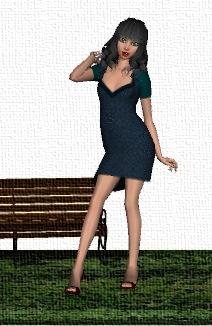
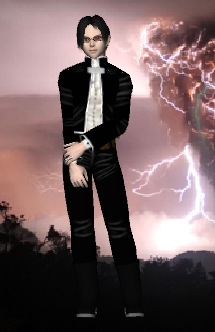
Your Ztylist is your avatar in Frenzoo. In addition to personalising their face, there’s a wide range of beauty products, hairstyles, clothing and accessories to choose from to create the look you desire for your avatar. Once you have chosen your Ztylist’s look, you can also alter the way they move (their Pose), and change the way their background (Home) looks. The Pose is a looped animation; you can easily choose when in the sequence to take an image (Snapshot) to get the effect you are after.

Shop

One of the ways to achieve your personal look is to shop for items. Clothing, hair and accessories are made by the Frenzoo team, and also by VIPs, who are able to create items to stock their shops with. Though currently somewhat limited in range, the number of items is growing daily, and the range of styles covered also continues to expand. Right now, only Frenzoo team members have the ability to create make-up, though they are always open to suggestions as to what they should add to the collection next.

Create

Of course, if the shop doesn’t carry just the item you desire, you can always make your own. Making personalised garments, shoes and accessories is a snap with the item creation tools supplied. There’s a stage for cutting, for making the pattern for the fabric, and for adding details like buckles, pockets and gems. Simple items can be done very rapidly – more complicated items take more fiddling and more time, but are eminently possible. The original shape of your item is determined by the template you choose initially: a ball-gown cannot be cut to make jeans, but jeans can easily be cut down to make shorts.

Right now, VIP status is gained by demonstrating your capability and interest to the Frenzoo team – look in the Frenzoo forums for the appropriate information.
iantoagain.jpg

The Zoo

Under the Zoo tab, you can get a quick overview of what other people’s Ztylists are wearing, and you have a quick link to their profile pages. Also under the Zoo tab are the Clubs, which are a great way to meet and communicate with people who have the same interests as you.

Shows

Shows are a fun and entertaining way to share your outfit creation and compilation abilities! It’s also a good place to make new friends. Each show has a theme; past themes have included Barbie, Emo and Cosplay (Superheroes, in this case). The idea is that you dress according to the theme, and then everyone gets a chance to vote for their favourite outfit. To keep things fair, the Frenzoo team has ensured that you can’t vote for yourself, and asks that you not spam people asking for their votes!

Share

Frenzoo has made it easy to share around the Frenzoo love – there are a wide range of banners and logos available to place on other web sites, and it’s also easy to place snapshots of your Ztylist on blogs, Myspace, and other similar places.

Forum

The Frenzoo forum is essentially like any other forum – it contains useful information about the site, alerts users to upcoming shows and changes to Frenzoo, and is a great place to carry on conversations with other users in the community. Moderation is in place to keep the atmosphere friendly and safe – if you wouldn’t say it to a 13 year old, don’t say it here.

Verdict

Frenzoo is a nifty piece of work, and there are more improvements to come. It may or may not be attractive to you now, but be aware that there are many changes in the pipeline – and one or more of those might make the difference that gets you intrigued.

Popularity: 2% [?]

Second Life user retrospectives

This may be the future, but Im looking at the past.

This may be the future, but I'm looking at the past.

The Second Life sixth birthday is looming. What, I wondered, were the changes, for good or for ill, that made the biggest impacts upon the community of users, since the last birthday? While pondering this, I had the following thoughts:

“Don’t worry, users can barely remember what happened last week. 12 months down the track, they’ll have forgotten the whole thing.”

We’ve all had this thought at one time or another: we’ve held the expectation that the majority of users will not only not notice the impact of the Second Life event that causes us so much elation, or grief, or confusion, but will surely not remember it in times to come. Perhaps the majority of users have not even held an account for that long.

Maybe that’s true.

But stop to consider this: a minority of users are deeply invested in Second Life. If a minority of users both notice and recall events that occurred with respect to Second Life, perhaps that’s ok. If the minority of users are the people who use Second Life more of the time, then the impact of their memories could be weighty indeed.

Let’s take that as read.

Now combine this with the fact that memories are elastic in time. Things that you felt very strongly about at the time will tend to linger in the memory, and can seem to be more recent than other, less charged, memories.

So, we have a minority of users who, with their investment in Second Life, are more likely not only to have long and sustained memories of things that affected them, but also to continue to talk about those things, and to pursue restitution where things have gone badly. Their effect upon Second Life and upon the community is greater than you might otherwise expect, in this specific fashion.

During the week, I asked readers of Tateru Nino’s Dwell On It blog, and others, to leave a comment containing their memories of Second Life, highlights and low lights, over the past 12 months. I also asked them not to do any research, but to work from their own memories alone. I felt that it was important to ask users who have enough investment in Second Life to read blogs about it, and to respond.

As you might expect, respondents remembered quite a number of things that had happened previous to that time as actually occurring in that year.

The other thing that struck me was the overall number of events that were recalled by each user; i.e. many, many more than I had expected, or could remember myself.

So, with those thoughts, I present to you the list I compiled from the responses I received, in date order, with links to interesting and pertinent information.

Age verification: announcement to implementation.

4 May 2007 Age and Identity Verification in Second Life

5 December 2007 Age verification arrives on the Second Life grid (updated)

Ageplay: in the media, getting banned.

10 May 2007 Child Porn Panic Hits ‘Second Life’

30 October 2007 Virtual Ageplay Still Too Real

The gambling ban.

25 July 2007 Wagering In Second Life: New Policy

The banking ban.

5 January 2008 Virtual Banking – Linden Lab intervenes

Bay City announced.

22 February 2008 http://secondlife.wikia.com/wiki/Bay_City

Trademark issues.

25 March 2008 Linden Lab asserts control of names and images

Havok4 released on the main grid.

31 March 2008 Cry “havoc” and let slip the squirrels of war!

Mark Kingdon, new CEO.

22 April 2008 Announcing our New CEO!

Second Life fifth birthday: who and what is not welcome?

21 May 2008 Calling All Cultures to the Second Life 5th Birthday Celebration

30 May 2008 Calling all cultures? Not any more.

30 May 2008 Shape-Based Exclusion [Updated]

5 June 2008 M-rated avatars disinvited, then re-invited, to Linden’s birthday bash

16 June 2008 LL Hopes For Nipple Free 5th Birthday Celebration

SL5B.

“M Linden’s speech at SL5B viewed by many as a slap in the face of early adopters.” Marianne McCann

“The Linden Prize was also at SL5B. I remember how everyone was anticipating the “big news from Mitch Kapor”, and then scratching their heads at what it turned out to be.” Jacek Antonelli

Mono.

21 August 2008 Mono Launch

Burning Life 2008.

Ran from 25 September to 5 October 2008 http://burninglife.secondlife.com/

New City Sims.

20 October 2008 New City Area Discovered

Immersive Workspaces.

20 October 2008 Linden Lab and Rivers Run Red launch Immersive Workspaces 2.0

Openspace controversy.

28 October 2008 Openspace Pricing and Policy Changes

28 October 2008 Lost in the void

Big Spaceship.

3 November 2008 Transforming the Second Life Experience

Winterfaire.

28 November 2008 Winterfaire! Coming December 19 – January 5

13 December Win a Space in the Second Life Holiday Marketplace! (The Holiday Marketplace got underway shortly before the holiday period was over).

Xstreet and OnRez.

20 January 2009 XStreet SL and OnRez to Join Linden Lab!

Maps.

22 January 2009 Improvements to mapping and upgrade to SLurl.com

Linden Blog.

18 February 2009 After much ado with half-measures, the new Linden Blog is released.

Content Ratings.

12 March 2009 Upcoming Changes for Adult Content

21 April 2009 Update – Upcoming Changes for Adult Content

27 April 2009 What do Second Life’s new content ratings actually mean?

Second Life and Open Source.

30 March 2009 Intensifying Open Source Efforts

Finally, I noted that we noticed several Lindens leaving (Robin, Zee, Ginsu, Katt), but barely noticed those who came to take their place.

See this, Linden Lab? Users matter, and they have long memories.

Popularity: 3% [?]

The Super Secret world. Shhh!

It was the year 2050 and the City was under attack. We held out as long as we could, those of us who had chosen to stay behind. We kept our vigil in the dark, all the lights out, excepting only the dim illumination from our monitors, both for reasons of conservation and safety. At random periods, the missiles came in on trajectories we were barely able to track; those of us with the best reflexes and eyesight were on duty bringing those missiles down, before they were able to explode against our shields, or, worse, take down yet another part of the City.

In the end, the City fell, though I continued on.”

“Armed with the best in winter garb and a snowboard, I hurried swiftly to my destination. Even all the snow flying through the air and the powder obscuring the snowboard at my feet could not make me falter; I darted to and fro, left right left again, leaping over obstacles – fallen trees, wandering livestock – all the while pulling wicked stunts with the board. Flips backward, rolls to the front, high, higher into the air I leapt, twisting, turning, hot dog, man!

Time is running out …!”

“I levelled the dart at my target. ‘Breathe,’ I thought to myself, ‘Breathe slow.’ The goal is within reach, I’ve traced the parabola that the dart will follow in my mind a thousand times already – I know this, I can do this. Through the steel walls, bounce off the back, down the chute and through to a glorious finish. ‘Watch the bombs,’ I told myself, ‘Watch the bombs!’

But the bombs weren’t even the biggest problem here.”

“So upon my return from my missions, I checked the date, checked my spending account. Spendings – up 200%, a satisfactory result. But the date, oh, that mendacious date! I couldn’t believe I still had five days to wait before my eleventh birthday, the day I would also get to choose a pet of my very own to care for! Oh, the sheer unfairness of it all!

‘Patience,’ I counselled myself, ‘Have patience.’

Because getting older is cool when you’re ten; losing your cool? Not so good at any age.”

Welcome to Super Secret!

Welcome to Super Secret! A world for tweens (that age when getting older still actually seems like a good idea) where the overarching goal is to grow up and have cool new responsibilities, and get neat stuff to play with.

Entry to the world is easy – almost too easy. Though it is stated in the Terms of Use that users must either be over 18 or have parental permission, little information is required to get in. Fortunately, the creators of Super Secret have made it an especially safe place for kids to be. Interactions are limited by several mechanisms: “super chat”, essentially regular instant messaging, can only be engaged in with parental consent, and is monitored by humans and by computer; “simple chat”, in which the user selects a phrase from a list, is available to all; gift giving, in which an item is removed from the user’s inventory and given to another user; and gag-gift giving, in which a practical joke of a specific nature is played on another user.

Additionally, Super Secret is free to join. However, you must pay a subscription to be able to advance beyond the age of 13. Users can continue to access the world for free regardless of age, but will not be able to unlock secrets or purchase some items available only to older characters. It should be noted that only USA credit cards are being honoured at this point, though the ability for users from other countries to subscribe is supposed to be in the works.

The main way to earn money (“Spenders”) and to gain age points (which advance the character’s age) is to play the mini games available both through the user’s card deck, and throughout the locations that can be visited in-world. There are over 20 games available when you begin, and many more can be found or purchased. Each game tests the reflexes and the ability to learn and adapt, and a knowledge of a little physics doesn’t hurt for some of them, either. If the casual mini games in Free Realms aren’t quite casual enough for you, then Super Secret’s will likely fit the bill.

Aside from this, there is a world to explore, filled with objects of worth to find, quests to fulfill, and secrets aplenty.

As an adult, I found the world to be safe and engaging, and the mini-games to be compelling enough to inspire persistence. The only thing I found to be slightly odd, coming from adult virtual environments, was the lack of public communication between users. Were all the kids trying out the world too shy, too confused, or busy to speak up? Perhaps there were many adults testing out the world, embarrassed to be asked, ”What grade are you in?” – I do not know.

If I was 10 again, or around that age, I’d be pleased to get into Super Secret as my first or second virtual world. If I was a parent, I’d be keen for my child to access it. And as an adult, I think I will indulge in the guilty pleasure of popping in every so often just to play the mini-games.

Popularity: 6% [?]

A better system? Teaching healthcare virtually

A story from our sister site, Metaverse Health.

MyCaseSpace data image

Rather than assessing their students through a paper-based examination, or even by having real, live people come in to pretend to be patients, it is starting to become more common to hear of healthcare educators asking their students instead to use computer applications and tools featuring digitally-created patients.

There are a myriad decisions that need to be made surrounding patient care. Students need to be able to wield a large amount of technical data, be able to think well on the fly, and be able to make quick yet considered decisions as healthcare professionals. These digitally-created, or virtual, patients can assist in building these skills.

Though virtual patients look just like the avatars that represent actual people in virtual worlds, the virtual patients usually have either an artificial intelligence (AI) or a scripted backend behind them. As opposed to an AI, the scripted backend cannot make decisions itself – instead , it follows a decision tree that has already been set before the student engages with it.

Medicine

Source 1, Source 2

MyCaseSpace is a Web-based application which presents virtual patients to students at irregular intervals throughout the span of their course. Virtual patients may contact the student at any time of the day or night, through their computer, and request a clinical consult. The virtual patients use avatars to communicate visually with students; the speech of the virtual patients can be accessed in 13 different languages. These patients use a scripted backend for their interactions, the design of which was based on video-game decision trees.

The application can easily be updated and altered to include virtual family members of the virtual patient to make demands upon the students.

Critical thinking skills used to be tested by setting examination papers; some people believe that the current set of students, being more digitally aware, will respond better to a digital presentation. Others are of the opinion that modern students have an expectation that they will continue to receive paper exams, and may have trouble with digital resources.

Though it has not been proven that this method of assessment results in either better or poorer results for the students, the professors and tutors find the system to be most beneficial for them. The application collects, stores, and processes data generated by the students’ assessments, cutting down on time and tedium, and increasing accuracy, for the marking individual.

Nurses

Source

“Nurse Island” has been set up inside Second Life by the Glasgow Caledonian University. Apart from the virtual representation of the university, built so that prospective students can learn to find their way around campus, the Nursing Skills Laboratory has been recreated and populated with virtual patients. These patients can be controlled either by an AI or by a tutor, and use text to speech synthesis rather than recorded voices.

The conversations held between patients and students are recorded, so that students can be debriefed later by a tutor. This facility will open early next year.

Paramedics

Source 1, Source 2

This Second Life project represents a partnership between St George’s, University of London and Kingston University.

Paramedic students will work in teams of three or four, and will encounter emergency scenarios in Second Life in which they will need to treat a virtual patients or patients. They will need to perform such tasks as checking the patient’s pulse, dressing wounds and administering drugs. They may also need to be able to use equipment that would typically be found in an ambulance, such as oxygen masks and electrocardiograms (ECG). After assessing and treating the patient, they must load the patient into the ambulance and set a GPS device to take them to the hospital.

On reaching the hospital, students then handover a set of patient notes to their tutor via email.

Emily Conradi, e-Projects Manager, says: “Paramedic students spend a lot of time in work placements, which can be based anywhere in the country, so it can be hard for the students to meet face-to-face with each other and with their tutors.”

CPR and emergency first aid

Source

The Italian Resuscitation Council (IRC) headquarters in Second Life (to teleport there, click here) has been set up as a place that people can be trained and re-trained, whether they be instructors, medical professionals or laypeople.

The IRC training simulations for instructors and medical people would include simulations to improve and test teamwork, leadership and technical skills. The simulations would also impart knowledge concerning CPR and other emergency training procedures.

Some of the information directed at laypeople includes cardiac arrest prevention knowledge and basic life support information.

In conclusion

Effectiveness of learning is not the only reason to use a virtual world or virtual patients. If learning is not less effective than by using other methods, and there are other benefits to the virtual alternatives, they may still be well worthwhile.

Popularity: 3% [?]

Will Internet censorship soon include Virtual World censorship?

Contrary to popular belief, there is no direct relationship between Australian and American laws. Australians are not afforded all the protections that the American people have access to by law, although in some circumstances Australian society works as though those protections existed. Americans are protected from governmental censorship by the First Amendment to their Constitution. Even though Australian law does not guarantee that governmental censorship will not occur, many Australians assume that we have that protection, and for the most part, this has been borne out in practice, if not in law. Here is a list of rights that are protected by law in Australia.

Stephen Conroy would like to see both law and enforcement of law be enacted with regards to “Internet” censorship.

Senator Conroy is a Catholic, and socially conservative. It is likely  that his wishes will coincide with a minority of users of the Internet, both because the way in which the law is to be enacted is unadvisable, and due to a generalised belief in the right of all Australians to free speech, misplaced or not, especially as regards material available across the Internet.

It is not yet clear from the Senator’s statements who will be in charge of deciding the parameters surrounding the law: what material will and will not be allowed to be transmitted across the Internet, and whether “the Internet” in its entirety will be censored, or whether they are referring only to web pages available over the Internet.

According the the Wikipedia entry concerning Internet censorship, Australia is in the OpenNet Initiative (ONI)’s nominal category as of 2008; content classified “RC” or “X18+” may not be hosted within Australia, and content from outside Australia may be blacklisted.

The filtering aspect is of great concern.

  • The blacklist will not be made available for public consumption.
  • Filtering technology is of very little practical use at this point. A blacklist of every site containing banned or age-limited content would need to be kept.
  • Current filtering boxes slow all Internet traffic, on average, by 30%.
  • The government has declared it will not let internet users opt out of the proposed national internet filter. Source.
  • Finally, this one’s a real doozy – a private company will have access to a record of all traffic passing through the filtering boxes that they provide: essentially, all the Internet traffic in Australia. Interestingly, the government will not necessarily have access to that information.

There does not yet appear to be any information regarding restrictions on content provided by services other than the Web. One wonders how services such as some of the virtual environments might be restricted – except for cutting off access entirely. Banned content from virtual worlds such as Second Life cannot be separated from allowable content by a third party. Perhaps, as with the legislation in Germany and Britain, it will become the responsibility of the individual to keep child pornography and other banned content off their screens; this is the case for all online and print media in these countries. More likely, the Australian legislation will expand to encompass virtual worlds in some way, probably circumventing the whole issue by cutting off access to such worlds altogether. Much as it would be preferable to see better education of our youth regarding these topics, in preparation for becoming responsible, Internet-using adults, it seems more likely that the government will choose to to do the work for us, much as the Chinese government does for its people.

Censorship of the Web has already arrived; how far behind can the censorship of other services be? How disruptive could the censorship of virtual worlds be?

Popularity: 2% [?]

Pride and Prejudice

Since virtual environments started getting noticed by the early adopters, there has been some discussion about social mores in and out of virtual environments. In particular this applies to users trying out avatars of a different gender, race, or overall look, to their regular atomic world selves. Educators and academics in general have noted students and other users typically bring their prejudices and biases with them into virtual environments, but that they also sometimes take what they have learned in virtual environments back into the atomic world with them.

Unfortunately, it seems that users open to such experimentation were already quite open-minded. More closed-minded individuals are less likely to experiment, and less likely to lose their prejudices along the way.

I belong to two genres of people which are often vilified and denigrated – I am somewhat Goth, and quite a bit Geek, and I express this both visually and in the way I act, both in virtual environments and atomic worlds. These are two groups I have found to be unpopular with other people, though less so in virtual environments. I had hoped that some of the acceptance from virtual environments might have spilled over into the atomic, but this does not seem to have been true to the extent that I might have hoped for.

Goths and Geeks that I know tend to have some areas of overlap – they tend to be individualists and thinkers, they tend to make up the innovator and early adopter part of the populace, they tend to act and dress distinctively, and they tend to be unpopular with other groups: educators, academics, business people – normal, mainstream folk.

I wondered why. Especially, I wondered why Goths and Geeks should be so unpopular amongst people who use virtual environments, and who are exposed to people with curious looks and outlooks on a regular basis.

This is what I came up with:

We make choices about how we are going to look, act and live our lives. We have made choices independently of our genes, of our circumstances. Other people could also make this choice – but instead they have remained with the cultural ideas and circumstances they were born into. The choice they often make instead is to disparage and utterly reject the people who have decided to live their lives intentionally.

Along similar lines is this thought:

I recently heard someone referring to their IT staff as “the enemy”. As an IT Geek, I found this to be a most off-putting thought. It makes it sound as though I have to wage war whenever I want to get my work done, making my under-paid, over-worked position even worse, and, boy, does it sound unfriendly! Again with the wondering – why?

The IT Geek often has at least two agendas: their own practical agenda (where is the point in having a firewall if you are just going to open ports for people at random?), and someone else’s political agenda – usually their boss, sometimes another member of staff. Rarely does the IT Geek have their own political agenda – if it seems that they do, it’s more likely that they are defending someone else’s policies, or it’s a case of apophenia (seeing patterns where none exist). Also, Geeks are rarely in a position to make policies.

I am a Goth, and a Geek, and I belong to a number of other unpopular sub-groups. I’d love for our society to change, with the assistance of virtual environments, to one that is more tolerant of people who are different, whether that be by birth, environment or choice.

But I’m not holding my breath.

Popularity: 2% [?]

AVWW Doggie Bag

Anastasia

A big thanks to Feldpsar Epstein for attending the real-world AVWW event last weekend. What follows are some of the highlights from her perspective. We’d also love to hear your thoughts.

The Australian Virtual Worlds Workshop, Friday 28 November and Saturday 29 November 2008, held at Swinburne University, Hawthorn Campus, was a bit of a mixed bag. I present here some of my favourite take-away notions.

Presence in Virtual Worlds

The presence afforded by virtual worlds of many flavours can put conference and class participants on a more equal footing, where each individual has access to the event in the same way, i.e. through a common virtual world. Unlike video or phone events, where some people are present physically, and others are present through a technological medium, virtual worlds create a more compelling atmosphere, since each person has an equal presence.

Investing in understanding

It makes sense for educational institutions to make use of contractors and ‘experts’, especially where that knowledge or those skills are lacking amongst the faculty. However, it’s important also that the faculty invest some time and effort into expanding their own knowledge to the point that they understand what they are asking the contractors to do. There is little point in asking for the impossible and then feeling disappointed or cheated when it cannot be done.

Students are not just consumers of education

Students at all levels need to have input into their own education. It is important that students collaborate with and mentor not just each other, but also the faculty. This kind of education goes on in the real world all the time; failure to support it in virtual environments represents diminished opportunity for students.

VastPark – vast possibilities, simplicity in action

Vast Park is a virtual worlds platform being developed in Australia. The standards are open (as in Open Source), as is the code, to a large extent, except for pieces such as the renderer; these closed-source pieces have been introduced to cut down on the amount of work needed to be put into technologies that already exist and need not be duplicated. The Immersive Media Markup Language (IMML) was conceived with this notion in mind – “A deaf person must be able to communicate with a blind person.” This means, in essence, that rich, complex environments can be described simply, and that there is a vast range of accessibility options available.

“VastPark” is the name of the technology behind the virtual worlds that other people will create.

Hedonic Consumption Behaviours

Hedonic behaviours account for approximately 51% of intentions to use virtual worlds, making enjoyment the most significant predictor of usage.

Popularity: 3% [?]